
St Benedict's wisdom for common human problems
What is sustainable for real human beings?
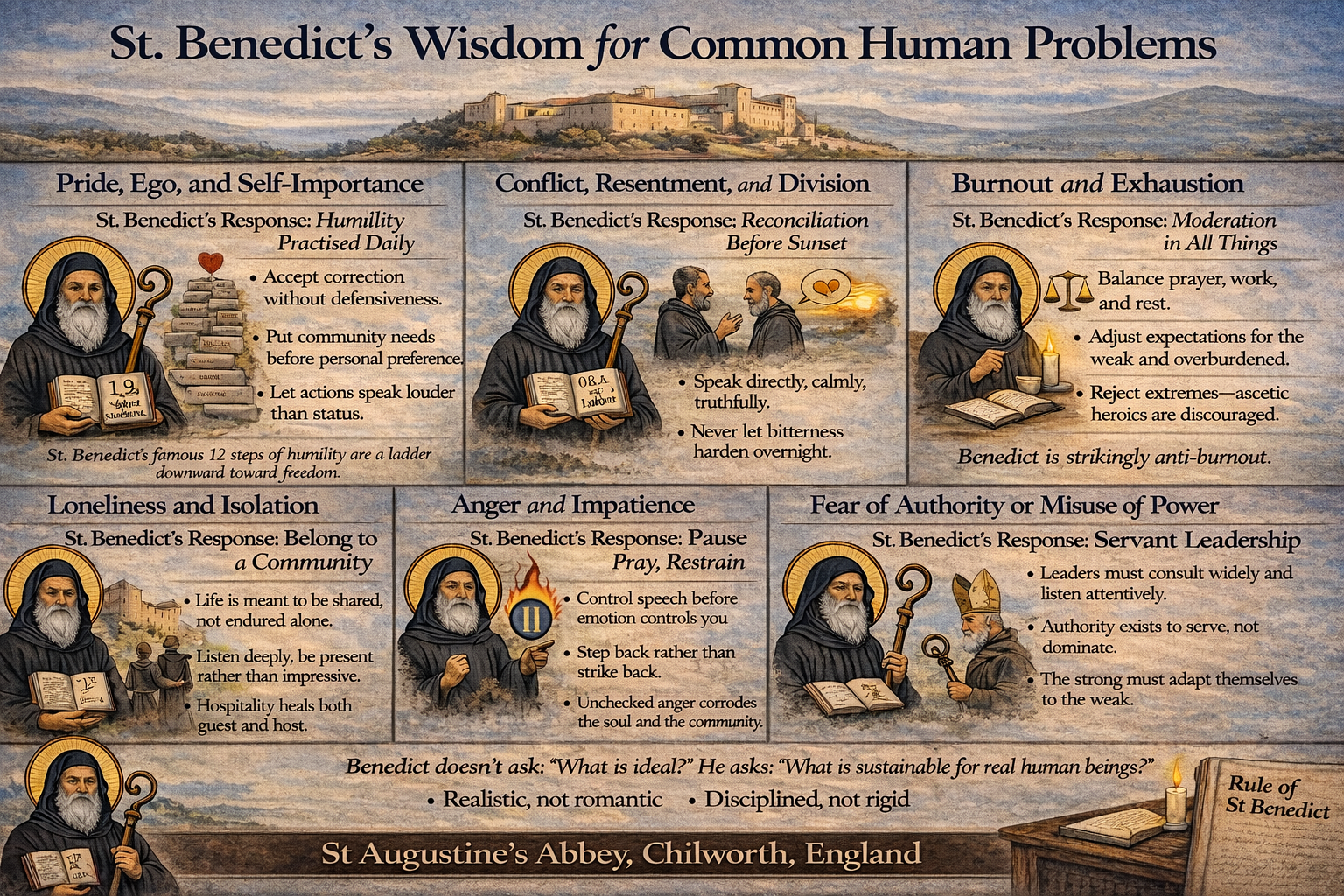
Below are common human problems and how St Benedict would typically respond, drawing on the wisdom of the Rule of St Benedict. Though written for monasteries, Benedict intended it as a school for the Lord’s service which are practical, humane and deeply relevant to everyday life.
1. Restlessness and overthinking
Benedict’s response: Stability and rhythm
- Stay where you are; don’t flee discomfort impulsively.
- Anchor the day in prayer, work, meals and rest.
- Trust that peace grows from faithfulness, not constant change.
“Stability is the cure for the anxious soul.” (Benedictine insight)
2. Pride, ego, and self importance
Benedict’s response: Humility practised daily
- Accept correction without defensiveness.
- Put community needs before personal preference.
- Let actions speak louder than status.
Benedict’s famous 12 steps of humility are a ladder downward toward freedom.
3. Conflict, resentment, and division
Benedict’s response: Reconciliation before sunset
- Speak directly, calmly, and truthfully.
- Never let bitterness harden overnight.
- Value unity over winning arguments.
Silence is preferred but never at the cost of charity.
4. Burnout and exhaustion
Benedict’s response: Moderation in all things
- Balance prayer, work and rest.
- Adjust expectations for the weak and the overburdened.
- Reject extremes—ascetic heroics are discouraged.
Benedict is strikingly anti-burnout.
5. Loneliness and isolation
Benedict’s response: Belong to a community
- Life is meant to be shared, not endured alone.
- Listen deeply; be present rather than impressive.
- Hospitality heals both guest and host.
“All guests are to be welcomed as Christ.”
6. Anger and impatience
Benedict’s response: Pause, pray, restrain
- Control speech before emotion controls you.
- Step back rather than strike back.
- Anger unchecked corrodes the soul and the community.
7. Fear of authority or misuse of power
Benedict’s response: Servant leadership
- Leaders must consult widely and listen attentively.
- Authority exists to serve, not dominate.
- The strong must adapt themselves to the weak.
This is radical leadership - still ahead of its time.
8. Meaninglessness and lack of direction
Benedict’s response: Seek God in ordinary life
- Holiness is found in fidelity, not novelty.
- Small acts done well matter eternally.
- Perseverance reveals meaning over time.
9. Over talking, noise, distraction
Benedict’s response: Silence with purpose
- Speak when it builds up, not to fill space.
- Silence sharpens listening - to others and to God.
- Stillness is not emptiness; it is readiness.
10. Judgmentalism and harshness
Benedict’s response: Mercy with structure
- Correct with gentleness, not cruelty.
- Always leave room for repentance and growth.
- Remember your own frailty.
St Benedict’s underlying genius
Benedict doesn’t ask: “What is ideal?”
He asks: “What is sustainable for real human beings?”
His vision is:
- Realistic, not romantic
- Disciplined, not rigid
- Demanding, but deeply compassionate